
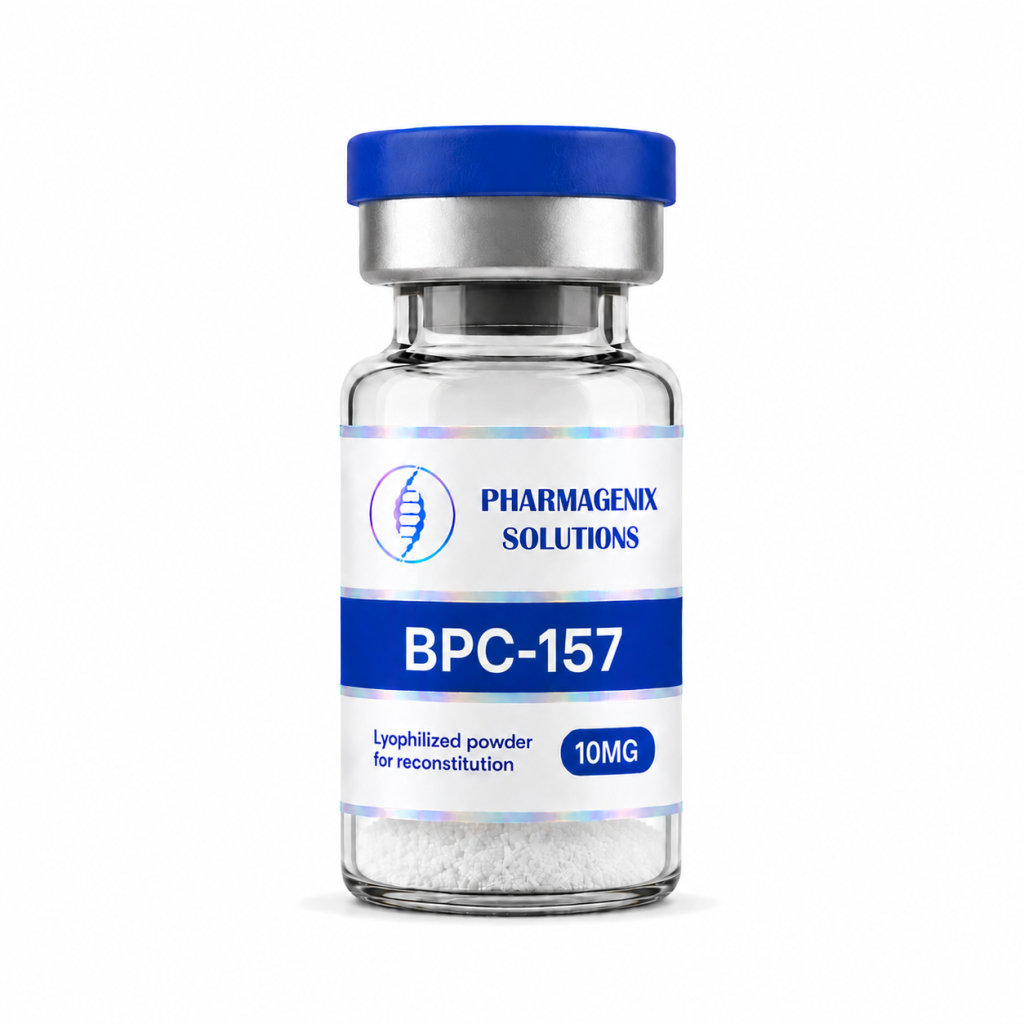
Specifications BPC-157:
Group: Peptides
Active Half-life: 7 – 30 minutes
Subgroup: Injection/ powder
Dosage: 10 mg (10000 mcg)
Application: 200 – 1000 mcg per day
Product pack: 1 vial
Retains water: No
Aromatization: No
BPC-157 Peptide
BPC-157 is a synthetic peptide consisting of 15 amino acids and is derived from a naturally occurring protein found in gastric juice. It has become one of the most widely discussed peptides in regenerative and recovery-focused research due to its potential role in supporting tissue repair, cellular signaling, and recovery processes.
Researchers have investigated BPC-157 for its potential effects on soft tissue health, including muscles, tendons, ligaments, and connective tissue. Scientific interest has also focused on its possible involvement in angiogenesis (the formation of new blood vessels), tissue remodeling, and the maintenance of gastrointestinal integrity.
Areas of Scientific Interest
Tissue repair and regenerative research
Tendon and ligament recovery studies
Muscle and connective tissue health
Angiogenesis and vascular support mechanisms
Gastrointestinal health and integrity research
Cellular recovery and tissue remodeling pathways
Key Features
High-purity synthetic peptide
Lyophilized powder for enhanced stability
Batch-tested for identity and purity
Widely studied in regenerative research settings
Manufactured using advanced peptide synthesis processes
Specifications
Peptide Name: BPC-157 (Body Protection Compound-157)
Appearance: White lyophilized powder
Purity: ≥98% (HPLC)
Storage: Store refrigerated according to product guidelines
BPC-157 continues to be a subject of growing scientific interest due to its broad range of investigated biological activities and potential applications in recovery and regenerative research.
Disclaimer: This product is intended for research and laboratory use only. Research involving BPC-157 is ongoing, and statements regarding potential benefits are based on preclinical and experimental findings. This product is not approved to diagnose, treat, cure, or prevent any disease.